Master Class SOUND SCULPTURES: Thinking Extra Sensory as an Artist by Steven Warwick
General Course Description
“Are you an artist looking to add a sonic/aural element to your practice? Do you want to think extra sensory as an artist, developing heightened perceptual abilities that transform how you experience space, time, and creative material? This course is a five day intensive course which will be held at Berlin Art Institute. A class like this seldom occurs, and is for the curious. Warwick’s own practice is wildly diverse and redefines preexisting notions of what it is to make art. Using sound as sculptural material that shapes space, constructs narrative, and creates entirely new dimensions of meaning in artistic work. It serves as a point of departure to provide a cutting edge discursive framework, you will learn both how to make sonic work and also how to be able to theorise and articulate your unique perspective in this sonic world.
The Sound Sculptures masterclass focuses on connecting disparate strands of sound art, experimental music, performance theory, and contemporary visual practice alongside praxes such as field recording, digital manipulation, spatial audio, and live sound performance to take you on a journey which will help you question your own preconceptions about sound and enrich and expand your ongoing artistic vocabulary. There is a focus in this class of being present in a space, together, learning something in real time, and allowing yourself and the class to unfold in the present moment. By coming to the BAI classroom context, Warwick will present something not available online and so esoteric, a singular thinker who seamlessly bridges artmaking, sonic, performance and writing fields, you will be uniquely enriched by this experiential and experimental learning programme.
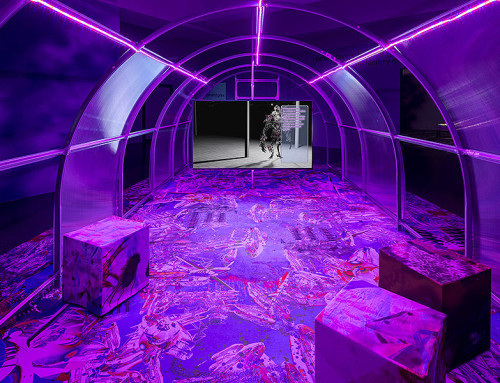
In Warwick’s own practice, he creates assemblages of performance, image, sound and language across various media, including video, sound, performance, sculpture and installation in various formats of exhibition making, theatre, performance, concerts, book length essays, criticism and electronic music. He has released albums on the PAN label, lectured at Cal Arts, CSM London Vienna Art Academy, and exhibited at the ICA London, Quai Branly Museum Paris, SMK Denmark, Issue Project Room NYC, KW Institute for Art Berlin. He has also co-authored Fear Indexing The X Files w Nora Khan (Primary Information, 2017) and Notes on Evil, recently published by Floating Opera Press.” (Text by courtesy of Steven Warwick)
Learning Outcomes
This five day course focuses on connecting different islands of sonic possibility. Through a combined rigorous theoretical framework and fluid approaches to sonic praxes, you will facilitate your own approach to how we ‘sculpt’ sonic narratives, garner an understanding of how sound functions as both material and medium, how you create meaning through organized sound and articulate narrative convincing for contemporary artistic practice. Bridging research and artistic practice, critical discussion, rethinking sound art, experimental music, and performance history, each session will build upon the former with the goal of developing sophisticated approaches to integrating sonic elements into visual and performance practice.
Collaboration and group discussion are also integral parts of the course. Participants will have the opportunity to engage with fellow artists and share areas of sonic knowledge. This exchange of ideas and experiences can further enhance the learning experience for all involved by manifesting sonic desires and goals which you are yearning to realise. By being exposed to previously unknown sonic approaches, artists can refine their skills and open up new techniques into their work.
The course will incorporate listening sessions from sources such as pioneering sound artists John Cage, Pauline Oliveros, Robert Ashley, Marian Amacher, La Monte Young & Marian Zazeela, Éliane Radigue, Harry Bertoia’s sound sculptures, Harry Partch’s microtonal instruments and performance works, contemporary practitioners like María Chávez, Theo Parrish, and Terre Thaemlitz (including work as DJ Sprinkles), alongside field recording, spatial audio, and live electronics.
General Guidelines
This course is designed for artists of all disciplines and for those interested in expanding their practice beyond the purely visual realm into the rich territories of sound, time, and sonic narrative. The course will incorporate listening practices, field recording techniques, digital audio manipulation, and collaborative sound making. No prior knowledge of sound art, music production, or audio technology is necessary to participate in the course. However, participants should have an open and engaged attitude towards experimental learning and be willing to step outside their comfort zones and experiment.
Benefits
- Participants will learn, adapt and form their own ideas and approaches to sculpting sonic narratives.
- Participants will learn new approaches to connecting sound with visual practice which are both esoteric, disparate and universal to create new tools for artistic meaning making.
- After the class, participants will be comfortable incorporating sonic elements into their existing artistic practice and be open to developing their work with a sonic dimension.
- Participants will have the opportunity to create new sonic artworks using field recording, digital manipulation and performance techniques
- Participants will also have developed a set of building blocks to devise new sonic projects and integrate sound into their evolving practice
Methods and Topics of Teaching
- Lectures and presentations with audio and visual components
- Pauline Oliveros’s “Deep Listening” practices and sonic awareness exercises
- Field recording expeditions to capture sonic material
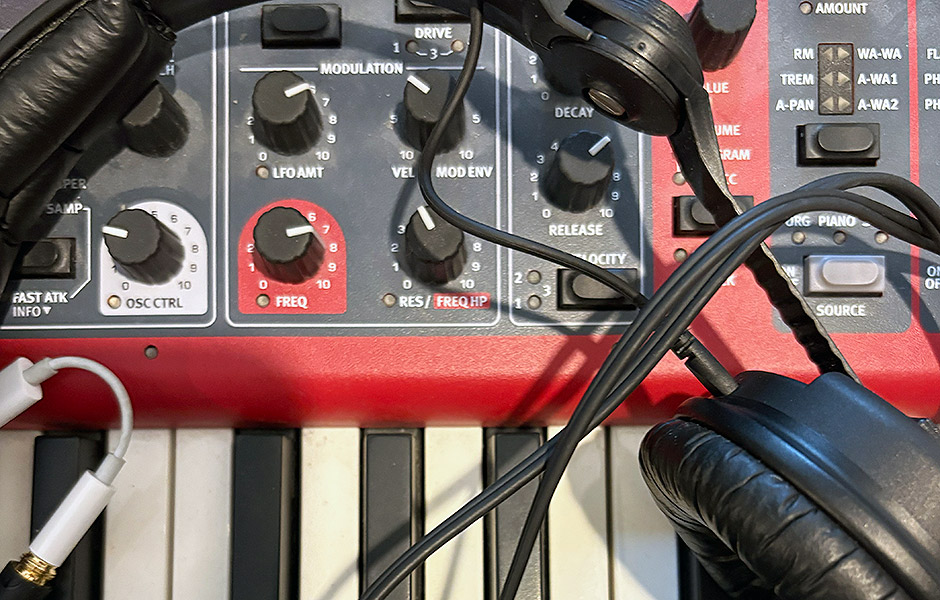
- Hands-on workshops with digital audio workstations and sound manipulation
- Group improvisations and collaborative sound making
- Individual and group instruction and critiques/feedback
Steven Warwick will present pioneering sound artists, experimental composers, contemporary sonic practitioners, and his own sonic oeuvre, to look at how artists can think sonically as well as visually, how sound functions as sculptural material, and how sonic elements can be integrated meaningfully into contemporary practice. Individual and group attempts at sonic experimentation and narrative construction. The group will be led by the artist via practical exercises, listening sessions, field recording, collaborative sound making. By the end of the course, you’ll leave with practical tools and the ability to produce and build sonic work that reflects your unique perspective and voice.
Program Structure with Daily Course Description
Monday
9:30 AM Reception at the BAI
10 AM – 1 PM Morning Session:
GROUP INTRODUCTIONS AND COURSE EXPLORATION
To begin the class, participants will introduce themselves, their practices, and what they would like to explore on the course. This creates a foundation for understanding everyone’s interests and goals for the week.
ARTIST TALK: INSTRUCTOR’S SONIC PRACTICE
Steven Warwick presents his journey through sound and performance, discussing his solo work emerging from noise music and ambient composition, studio work assisting Arnold Dreyblatt, soundtracking visual artworks, collaborations with choreographers, theatre productions, film soundtracks, and studio compositions. Discussion of his performance work and collaboration with Breadwoman (Anna Homler).
THEORETICAL OVERVIEW: EXPANDING SONIC NARRATIVES
Overview of key approaches to sound as expanded practice: John Cage’s work with silence, Max Neuhaus’s Times Square installation, Pauline Oliveros’s Deep Listening practice, and Robert Ashley’s television opera works. Introduction to different ways of interacting with and embodying sound to expand artistic narrative.
2 PM – 4 PM Afternoon Session:
LISTENING SESSION: DEEP LISTENING AND SOUNDWALK INTRODUCTION
Focused deep listening to excerpts from La Monte Young & Marian Zazeela’s “The Dream House,” Hildegard Westerkamp’s “Kits Beach Soundwalk” and “A Walk Through The City,” Max Neuhaus’s Times Square piece, and Robert Ashley’s television opera work. Overview of different approaches to using sound—immersive environments, environmental documentation, site-specific installation, and narrative construction.
GROUP DISCUSSION: SOUND AS PRACTICE
Discussion analyzing how these works function differently—sound as environment, sound as documentation, sound as intervention, sound as storytelling. How each approach expands what sound can do in artistic practice
Tuesday
Invisible Architecture
10 AM – 1 PM Morning Session:
LISTENING SESSION: ALVIN LUCIER AND ACOUSTIC SPACE
Deep listening to Alvin Lucier’s “I Am Sitting in a Room” – how sound reveals and transforms acoustic space. Discussion of resonant frequencies, room acoustics, and space as creative collaborator.
PRACTICAL WORKSHOP: SOUNDWALK AND FIELD RECORDING
Introduction to soundwalk practice and field recording techniques using smartphones and portable devices. Group expedition around Berlin Art Institute neighborhood and nearby spaces, focusing on sounds one might first ignore or not notice – capturing the acoustic environment and learning to listen actively to overlooked sonic details.
2 PM – 4 PM Afternoon Session:
TECHNICAL WORKSHOP: INTRODUCTION TO ABLETON LIVE
Basic introduction to digital audio workstation using Ableton Live. Importing morning’s field recordings, individual and group playback sessions with discussion.
EXPLORATION TIME: PLAYING WITH SOUND
Participants given time to experiment with their recorded sounds in Ableton – basic manipulation, layering, and discovery. Focus on play and exploration rather than finished results.
Wednesday
Embodied Electric
10 AM – 1 PM Morning Session:
WORKSHOP: VOICE AS SCULPTURAL MATERIAL
Introduction to vocal techniques beyond speech and song—breath, whispers, vocal fry, overtones, extended techniques. Focus on voice as raw material for sonic construction.
LECTURE: EMBODIED SOUND
Analysis of Marian Amacher’s work with inner ear drum vibrations and “third ear music.” Examination of María Chávez’s turntable practice as literal sound sculpture. Discussion of Theo Parrish’s concept of “Sound Sculptures” in DJ practice. Exploration of Meredith Monk and Anna Homler’s approaches to voice as sculptural material.
WORKSHOP: CONTACT MICROPHONES AND AMPLIFICATION
Introduction to contact microphones for capturing intimate sounds—heartbeat, breathing, fabric movement. Participants explore bodies as sound sources.
2 PM – 4 PM Afternoon Session:
PARTNER EXERCISES: SONIC PORTRAITS OF OTHERS
Working in pairs, participants create “sonic portraits” using contact microphones, field recordings, and voice.
TECHNICAL WORKSHOP: LIVE ELECTRONICS BASICS
Introduction to real-time sound processing and live manipulation using software tools.
GROUP IMPROVISATION: COLLECTIVE SONIC BODY
20-minute structured improvisation using voices, contact microphones, and live electronics with rotation system.
Thursday
Sonic Disruption & Social Frequencies
10 AM – 1 PM Morning Session:
LECTURE: SONIC STORYTELLING AND RADIO ART
How sound constructs narrative differently from visual or textual storytelling. Analysis of radio art and audio storytelling. Listening to the instructor’s 15-minute piece “Climate Change” as an example of sonic narrative construction.
FIELD RECORDING ASSIGNMENT REVIEW
Review and discussion of field recordings participants have made as homework assignment – environmental sounds and social acoustics captured independently.
WORKSHOP: SOUND AND SOCIAL PRACTICE
Discussion of community-based sound art and the politics of sonic representation. Historical context: William Burroughs’ experiments with recording riots, and New Order’s “Red Light District” (1982) as transgressive documentation. Contemporary analysis of Ultra-red’s community listening projects.
2 PM – 4 PM Afternoon Session:
INDIVIDUAL CREATION: 5-MINUTE SONIC PIECES
Participants work on creating 5-minute audio pieces incorporating body sounds from Wednesday and field recordings. Technical tutorial on pitch shifting, plugins, and digital manipulation provided as needed during the creation process.
INDIVIDUAL MENTORING
One-on-one consultations with instructor while participants work, discussing integration of sonic elements into their existing artistic practice.
GROUP PLAYBACK AND CRITIQUE SESSION
Sharing and critical discussion of completed 5-minute pieces, with emphasis on narrative techniques, sonic integration, and creative development.
Friday
Future Sound & Transmission
10 AM – 1 PM Morning Session:
COLLABORATIVE CREATION: TEXT AND SONIC INTEGRATION
Participants work in collaborative groups (one group of 10, or two groups of 10 if class is at capacity) to create longer collective pieces that integrate text-based elements with sonic composition. Groups work throughout the morning developing pieces that merge narrative and sound elements learned throughout the week.
2 PM – 4 PM Afternoon Session:
GROUP PRESENTATIONS AND STAGING DISCUSSION
Each group presents their collaborative piece. Discussion focuses on how these works might be staged or presented in performance or exhibition contexts – considering space, audience, technical requirements, and presentation formats.
FINAL REFLECTION AND NETWORK BUILDING
Group reflection on the week’s learning and planning for continued collaboration. Resource sharing and building ongoing network for creative support and future projects.
CLOSING DOCUMENTATION
Participants receive digital copies of group recordings, resource lists, and contact information for ongoing collaboration network.
General Information
Duration: January 18 – 22, 2027
Hours: Each day from 10 AM – 4 PM (including several breaks & lunchtime)
Seats: Min: 6 | Max: 20 | Language: English
Fees: There is a one-off registration fee of €50. The participation fee is €900 per person (without accommodation).
The fee is VAT-exempt by the Governing Mayor of Berlin – Senate Chancellery Higher Education and Research pursuant to Paragraph 4 No. (21) (a)(bb) UStG (German Value Added Tax Act).
Your Master Class Instructor
Steven Warwick is an artist, writer, and musician living and working in Berlin. His practice is paradigmatic of an interdisciplinary approach that encompasses theatre-making, sculptural installation, film making, social dramaturgy and composition. His work is disseminated on a multitude of platforms including records, galleries, nightclubs, publications and the Internet. Across these contexts, Warwick creates assemblages of performance, image, sound and language that speak to the ways in which ideologies construct and inhabit spaces, online and offline – from co-working spaces to clubs, television shows and online chat rooms.In its pluralistic live forms, Warwick’s work redefines the expectations and conventions that accompany events such as performance and public exhibitions.
His visual and performance work has been exhibited at KW Berlin; Schinkel Pavillon, Volksbühne Berlin, Klosterruine Berlin, Reading International, Zürich Moves! Festival, Art Night London, SMK, Copenhagen; The Institute of Contemporary Arts London, Hot Wheels Athens/ London; Cleopatra’s, New York; Beach Office, Berlin; As a musician working under his own name and, previously, as ‘Heatsick’, he produces and performs a hybrid live/ DJ set, releasing recordings with the club/experimental label PAN and has played at Berghain, Berlin; London Contemporary Music Festival; Trouw, Amsterdam; Bergen Konsthall; LAMPO/ Stony Island Arts Bank, Chicago; Issue Project Room, New York; and the Mutek and Unsound Festivals. His writing has appeared in Artforum, Texte zur Kunst, BOMB, Spike Magazine, Frieze, and Urbanomic and been published by Kunsthaus Glarus and Hartwig Art Foundation. He is also a co-author of ‘Fear Indexing the X- Files’, an audiovisual performance-lecture series issued as a book by Primary Information and Notes on Evil published on Floating Opera Press.
More information on the Steven Warwick Website.